


In Washington, D.C., Pride Month 2025 kicked off a few days early (in late May) with a special celebration: WorldPride, the multiday international Pride festival that’s held in a different city every year. Since WorldPride’s inception in Rome in 2000, this is the first time the U.S. capital has served as host, with festivities taking over city streets for more than a week.
Indeed, the WorldPride agenda was packed, but one of the key offerings was the Human Rights Conference. Held at D.C.’s JW Marriott and the adjacent National Theatre, the conference involved three days of panels, workshops, keynotes, and networking—featuring queer politicians, entertainers, scholars, business leaders, activists, and other queer and allied folks.
Day 1 unfolded Wednesday, June 4, and it took no time for an overarching conference message to emerge: the queer community can and should draw power from unity and vulnerability.
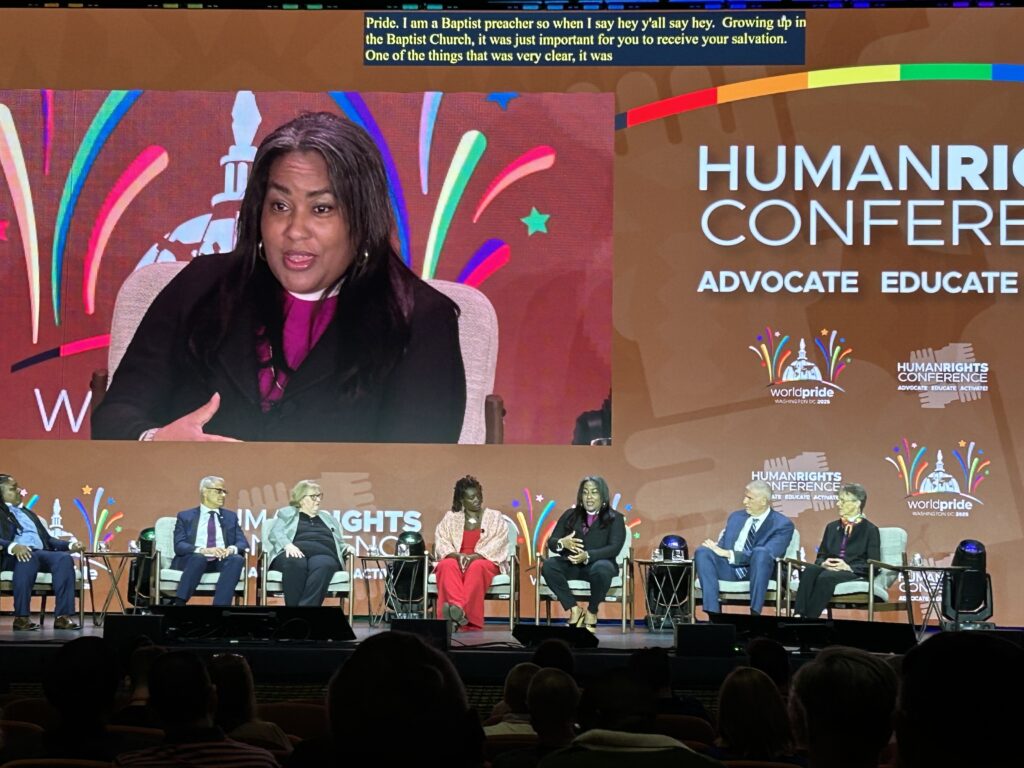
This was evoked early on when, following a call for attendees to share their home countries, countless voices revealed a global collage of participants—from U.S. states near and far, to Iceland, Estonia, Australia, India, Zimbabwe, Barundi, Argentina, and many more.
“[People from] all over the world coming together—unifying together, really—for the single cause of supporting LGBTQ+ people… it’s just something so beautiful to see,” said Connecticut-based attendee Fallon Cerreta.
A convening of queers might be expected to generate a sense of unity and vulnerability, but that energy was amplified by several elements, including a variety of session topics—i.e., there was something for everyone.

For example, in one panel, three parents discussed their journeys of learning about their children’s transgender identities, coming into acceptance, and ultimately becoming an advocate for the entire trans community.
The parents—a Desi mom (Aruna Rao), a Jewish mom (Mimi Lemay), and a Black father (Stephen Chukumba)–were very open about their struggles and missteps.
“I’m not gonna sugarcoat it,” said Chukumba. “[Before my child came out] I was a homophobic, transphobic asshole.”
Chukumba said he fought that transphobia, though, partly because he knew his late wife would have stood by their child.

Other such emotional panels include one on asexuality, in which panelists discussed about not feeling respected even within queer spaces; a session on the intersection of religion and queerness; and two mental health panels in which folks spoke about suicide attempts, self-harm, and traumatic ways loved ones tried to “help” them.
Fact-oriented panel topics abounded, too—e.g., the economics of equality, and the global LGBTQ+ rights legal landscape—as did advocacy-oriented options, such as an LGBTQ+ Victory Institute workshop on campaigns.
An additional highlight of the Human Rights Conference was the June 5 reception featuring renowned lawmakers—U.S. Representatives Sarah McBride (D-DE) and Maxwell Frost (D-FL), and State Senator Danica Roem (D-VA). They talked about making history—Roem as Virginia’s first openly transgender Congresswoman, McBride as the first openly transgender U.S. Congressperson, and Frost as the first Gen Z politician in Congress.
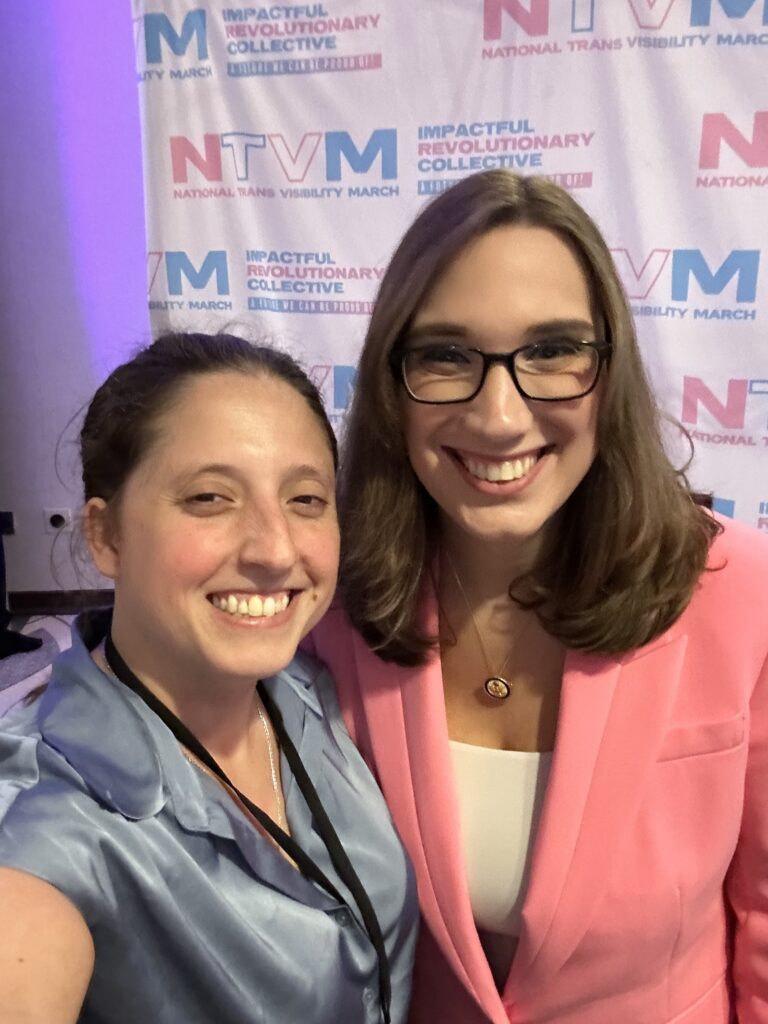
The trailblazers shared some of their greatest challenges, how they felt in moments of triumph, and how further change can happen—e.g., Frost noted candidates must appeal to young voters via a multi-issue platform. And, collectively, the lawmakers also urged everyone to keep fighting.
The legislators’ eloquence and fire made for a natural fit for the conference’s unity and vulnerability message.
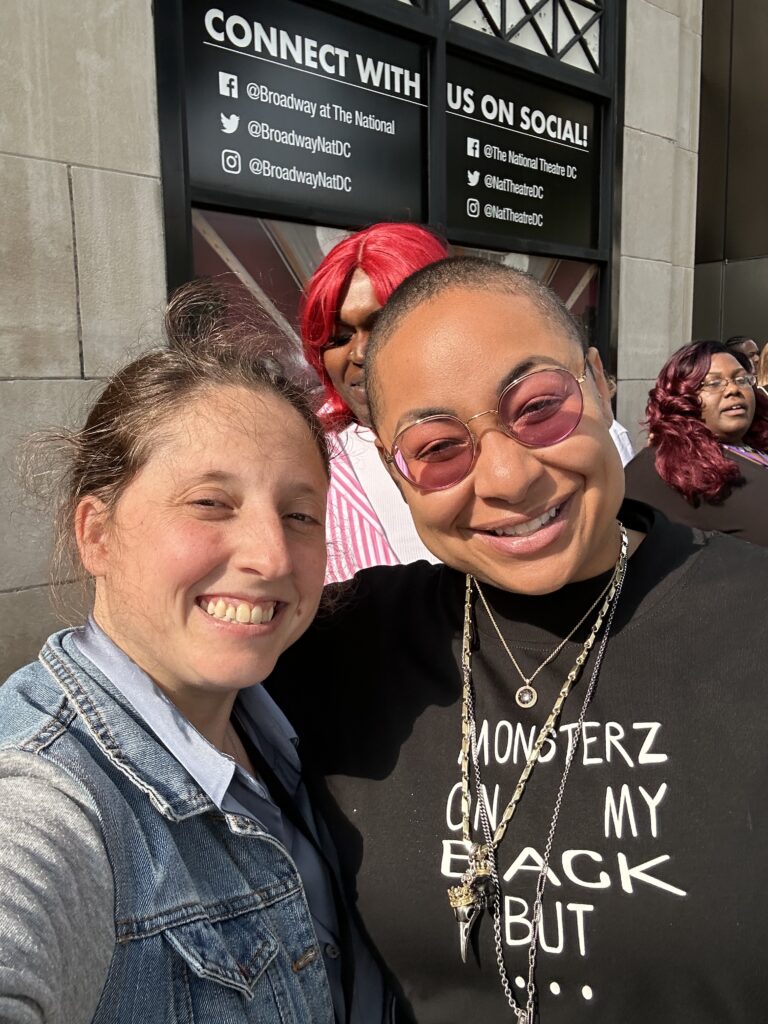
The same goes for the conference’s Friday closing discussion, which featured several queer entertainers—Raven-Symoné, Laith Ashley, Brian Michael Smith, and Trace Lysette—sharing their own journeys of self-acceptance, and of coming (and living) out in the public eye.
Raven-Symoné said when she began considering coming out, people in her life believed that doing so would ‘kill her grandmother and/or her career.’ Neither of those ‘consequences’ happened, and in fact, the star saw an influx of opportunities after coming out.
This statement, along with the rest of what was said in that panel deeply reflected the notion that unity and vulnerability are pivotal tools the global LGBTQ+ community can use in the fight for freedom and equality.
As U.S. diplomat and LGBTQ+ advocate Jessica Stern put it at the start of the conference, LGBTQ+ people aren’t a threat to humanity…
“[Rather], LGBTQ+ expands humanity,” said Stern. “We are a revolution.”