


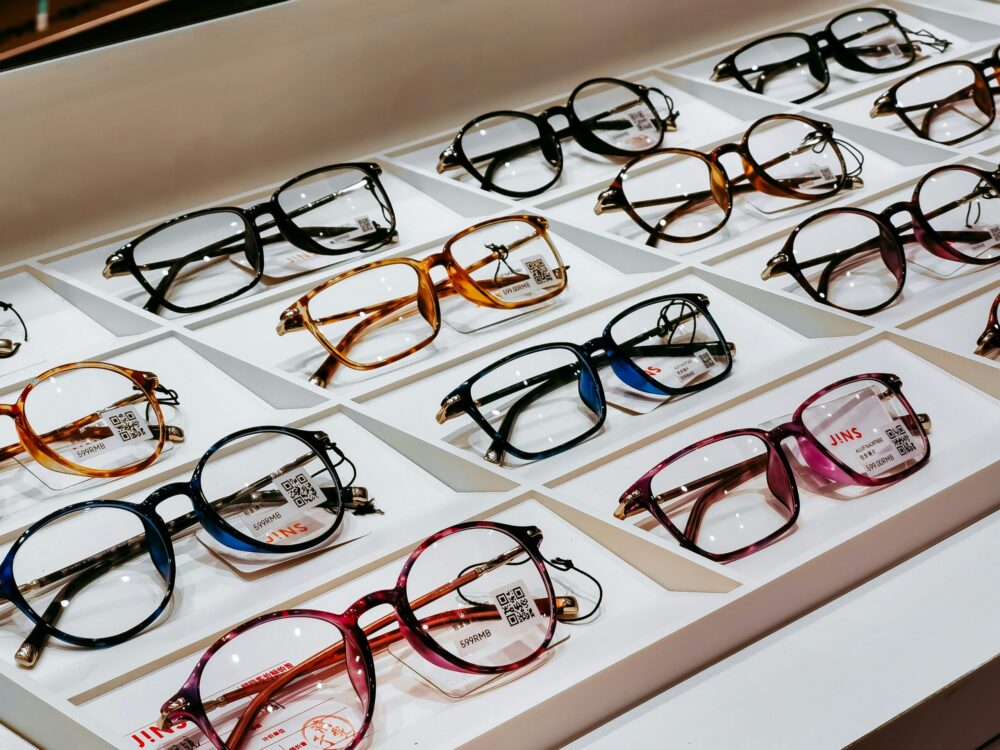
Frame selection is usually an afterthought, until there’s no time left for one. A pair that snaps the night before a trip, or a prescription change that can’t wait, leaves zero room for a two-week shipping window. Choosing the right frames before you place your order can mean the difference between glasses that arrive on time and a deadline you watch slide past.
Here are five tips for selecting frames that work for same-day glasses orders, so you’re not stuck waiting when speed matters most.
Prioritize Frames the Lab Already Stocks
The fastest orders ship when a lab doesn’t have to hunt down anything unusual. Labs offering glasses ready the same day maintain a specific in-house frame inventory, those are the pairs that move through production without a hitch. Order something outside that stock, and the lab may have to wait on incoming inventory, killing any same-day window before production even starts.
Before settling on a style, confirm that the lab explicitly lists that frame as eligible for same-day or next-day service. Many labs flag rush-eligible inventory in a separate category. Staying within those options is the single most reliable way to protect your timeline.
Standard silhouettes – rectangular, oval, and classic round shapes – tend to be stocked at higher volumes than specialty or trend-driven styles. But the practical point isn’t to avoid fashionable frames; it’s to confirm availability before you fall in love with a pair that can’t ship on time.
Avoid Frames With Complex Assembly Requirements
Some frames look effortless but take far longer to complete. Rimless and semi-rimless styles need lenses drilled or mounted directly onto the frame hardware, a process that demands both extra time and precision. Full-rim frames are different; lenses can be cut and seated quickly, which fits a same-day production schedule far better.
Decorative frames with layered materials, inlaid details, or adjustable nose-pad systems can complicate finishing just as much. Labs working at speed need clean, straightforward assembly. Any added detail eats into production time, even when every other step of the order goes without a hitch.
The practical rule is simple. For a same-day order, choose a full-rim frame in a material your lab handles routinely. Acetate and lightweight TR-90 are both standard in fast-production labs. Titanium is durable, but it’s also less common in same-day stock, so confirm availability before committing to it.
Match the Frame Size to Your Prescription
Frame size affects lens production more than most people expect. Very large frames demand more lens material, and high-prescription lenses cut to a large frame can turn thick at the edges, sometimes requiring extra finishing steps to look presentable. Very small frames don’t cause that same issue, but they can create fitting problems if your pupillary distance measurements don’t align correctly with the frame’s optical center.
For same-day orders, mid-size frames tend to be the lowest-friction choice. They’re easier to stock in volume, need less lens material, and rarely trigger edge-thickness problems that could slow production. If your prescription is strong – say, above plus or minus 4.00 diopters – confirm with the lab that the frame size you’ve picked won’t require special handling. A quick check before ordering saves time you don’t have.
Also make sure your pupillary distance (PD) measurement is current and accurate. An outdated PD measurement on a rush order doesn’t leave time for corrections.
Keep the Lens Type Simple
The frame you pick also has to work with whatever lens type you need. Progressive lenses require enough corridor length to function properly, and certain small or narrow frames can’t physically accommodate a correct progressive layout. Order that combination on a same-day basis, and the lab may have to call you to work out alternatives, adding hours you almost certainly can’t spare.
Single-vision lenses are the most compatible with a same-day timeline because they don’t have the fitting constraints that progressives or bifocals introduce. If you do need progressives, look for frames labeled as progressive-friendly, which usually means a minimum vertical height of 28 millimeters or more.
And resist the urge to add upgrades that require extra processing – certain specialty coatings or tints can extend lab time significantly. Anti-reflective coating is typically fast. Photochromic lenses and gradient tints are not always available on a same-day basis, so check before you add them.
Confirm Your Measurements Before You Order
No frame tip matters if your measurements are wrong. Same-day orders move fast, and there’s no buffer built in to catch an incorrect pupillary distance, bridge width, or temple length. Those errors don’t show up until the glasses arrive, and by then, the tight timeline that made same-day shipping necessary has already come and gone.
Get your current PD measurement confirmed by your eye care provider, or use a well-reviewed tool to measure it yourself at home. Beyond PD, compare the frame measurements in the product description against your current pair; eye size, bridge width, and temple length should all fall within a few millimeters of what you already wear comfortably. You’re choosing frames that work for same-day glasses orders, not just for style; the best-looking frame in the world is useless if it shows up uncomfortable or optically off.
If the lab offers a virtual try-on or a measurement guide, use it. Those tools exist precisely to reduce the kind of errors that slow orders down or lead to returns.
Conclusion
Speed and accuracy aren’t at odds when you start with the right frame. Stick with frames your lab stocks, go with full-rim styles in standard materials, match frame size to your prescription, keep the lens type compatible with a fast production window, and double-check every measurement before you hit submit. Do those things and your same-day glasses order is far more likely to land exactly when you need it.